

The three-zone model in endurance sports – why LT1 and LT2 are the key to better training
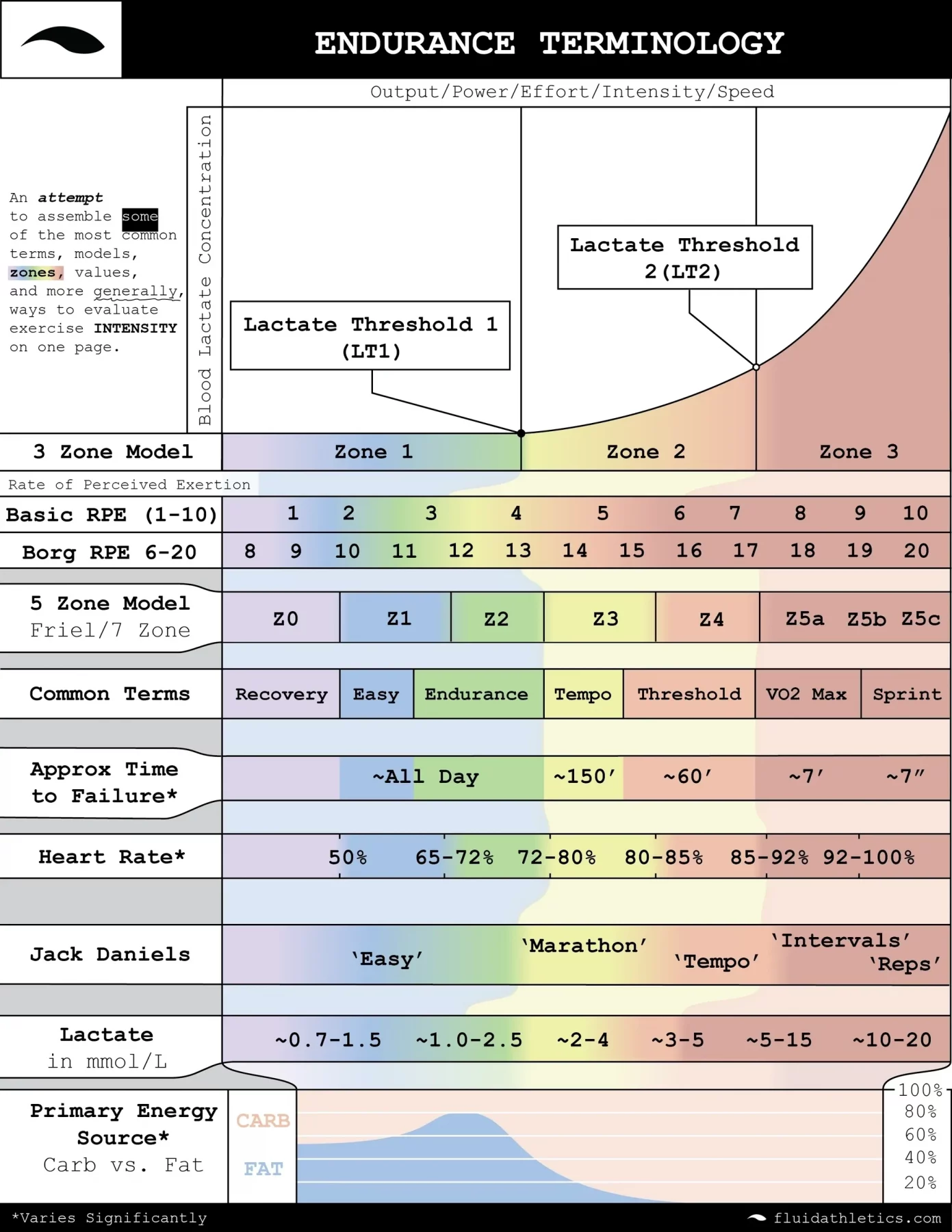
In endurance sports, many models exist for training control: 5 zones, 7 zones, percentage values of heart rate or FTP. However, in sports science practice – and increasingly in coaching – one model is gaining more and more traction: the three-zone model.
The big advantage:
👉 It is oriented not based on arbitrary percentages, but at two clearly defined physiological thresholds – LT1 and LT2These thresholds explain, what happens in the body, not only how hard it feels.
The two crucial thresholds: LT1 and LT2
🔹 LT1 – First lactate threshold (aerobic threshold)
LT1 marks the point at which the lactate level in the blood for the first time measurably rises above the resting levelThe body does produce more lactate, but it can still process it. metabolize completely.
Physiologically, this means:
-
Metabolism clearly aerobic
-
Fat burning dominant
-
Very low metabolic fatigue
Typical markers:
-
Lactate: approx. 1.5–2.0 mmol/l
-
RPE (Relative Perceived Stress): 2–3 out of 10
-
Breathing: calm, conversations easily possible
-
Feeling: relaxed, controlled, "I could do this for a long time"
👉 LT1 separates very light from structured endurance training.
👉 This area is central for long-distance and basic training.
🔹 LT2 – Second lactate threshold (anaerobic threshold)
LT2 describes the point at which Lactate is produced faster than it is broken down.From this point on, the metabolic load increases sharply; the load is limited shelf life.
Physiologically, this means:
-
Aerobic and anaerobic metabolism overlap.
-
Carbohydrate consumption increases sharply
-
Fatigue accumulates quickly
Typical markers:
-
Lactate: approx. 3.5–4.0+ mmol/l
-
RPE: 7–8 out of 10
-
Breathing: deep, rhythmic; speaking only in short sentences.
-
Feeling: "tough, but controllable"
👉 LT2 defines the maximum continuous performance capacity
👉 It is a key performance marker, but not a continuous training area.
The three-zone model – simple, logical, effective
From LT1 and LT2, the following results are obtained: three clearly defined training zones:
🟢 Zone 1 – below LT1
Regeneration & aerobic base
-
Lactate: < 2 mmol/l
-
RPE: 1–3
-
Feeling: relaxed, easygoing
-
Use: long-term basics, recovery, technique
👉 This is where the endurance base is built
👉 Especially important for Ironman, long-distance & ultra runs
🟡 Zone 2 – between LT1 and LT2
Transitional and threshold loading
-
Lactate: approx. 2–4 mmol/l
-
RPE: 4–6
-
Feeling: significantly more strenuous, but stable
-
Use: Speed training, longer efforts at race pace
👉 This zone is effective, but dosage-dependent
👉 Spending too much time here often leads to stagnation
🔴 Zone 3 – above LT2
High-intensity exercise
-
Lactate: > 4 mmol/l
-
RPE: 7–10
-
Feel: very hard, short durability
-
Application: Intervals, performance development, VO₂max
👉 High appeal, but high stress
👉 Use selectively and sparingly in long-distance training
Why RPE (subjective perception of exertion) is so important
Heart rate, pace and performance fluctuate – depending on:
-
heat
-
fatigue
-
stress
-
Hydration
RPE always remains available.
Well-trained athletes can measure LT1 and LT2 with astonishing accuracy. about her body awareness classify.
👉 Those who understand, how the zones feel, trains more robustly and sustainably.
Conclusion: Fewer zones, more clarity
The three-zone model is not a "simplified system", but a physiologically sound model of thought:
-
LT1 determines long-term endurance development
-
LT2 defines performance limits
-
The zones explain Why Training works – not only how hard It is
This is especially true for endurance and triathlon athletes:
Understanding better means controlling better.
Those who align their intensity with LT1 and LT2 and link it to RPE and body awareness not only train more effectively – but also more healthily in the long term.
Wishing you all a happy new year and a great 2026 season!
Michael