

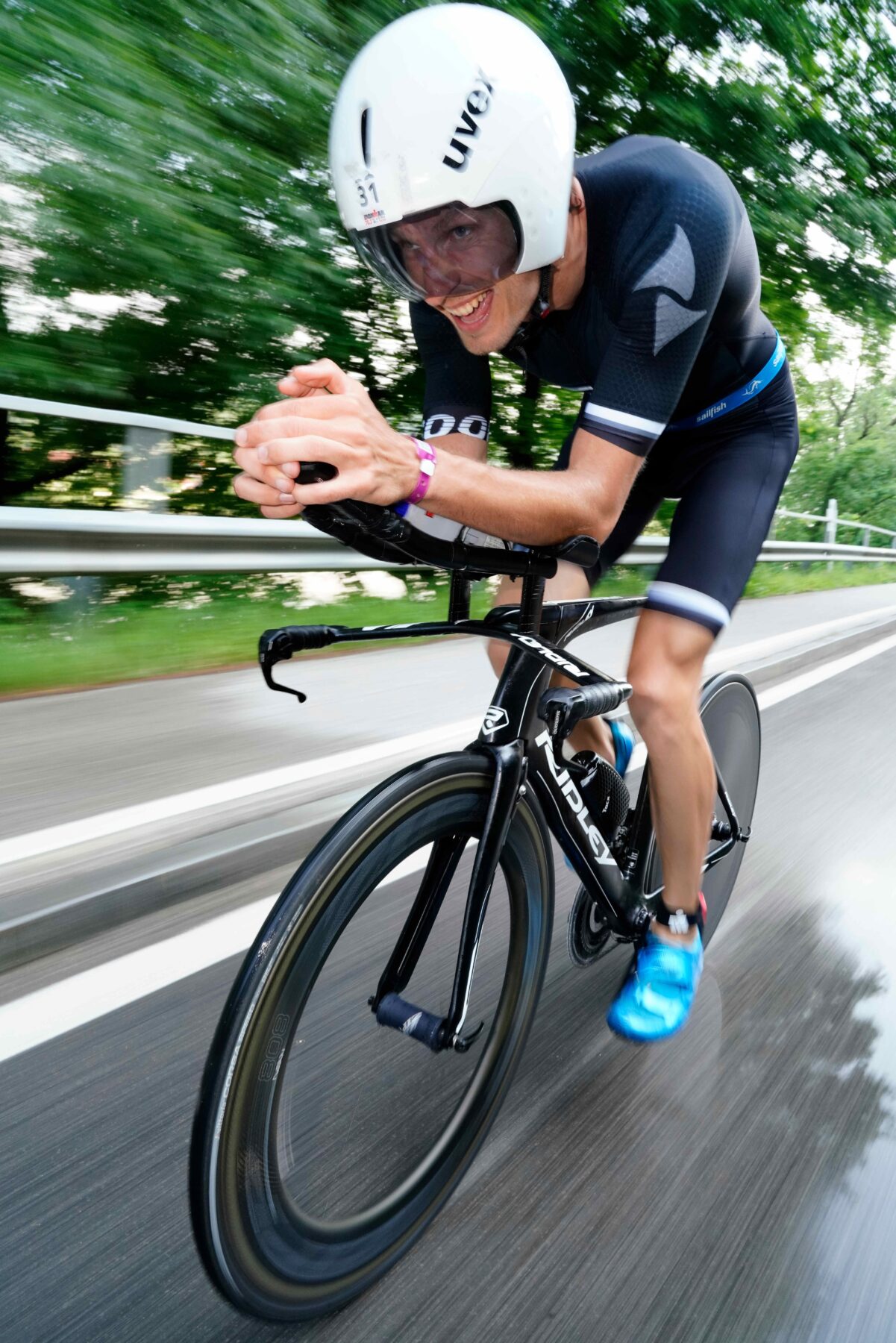
 Don't train like a pro if you don't have a pro life.
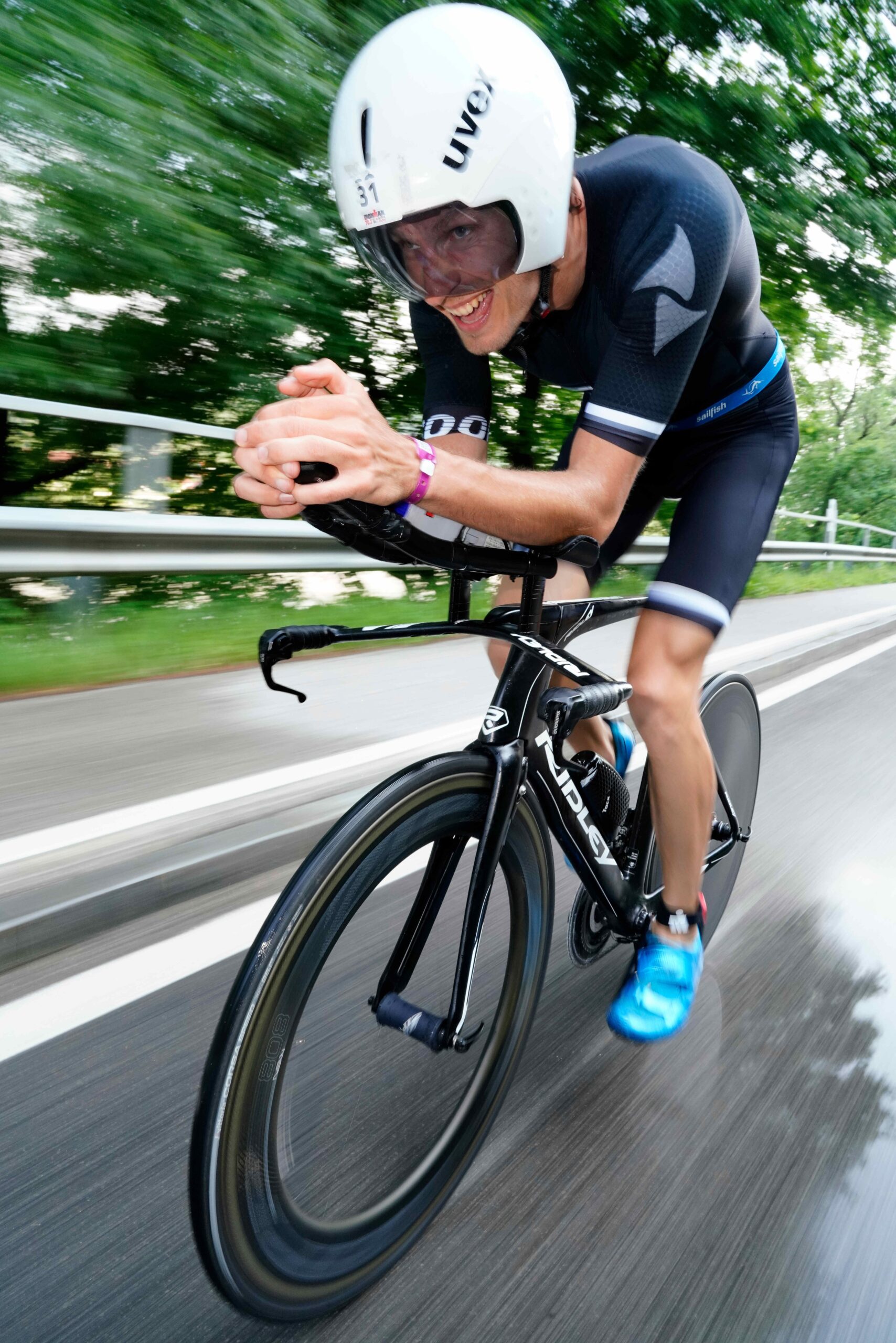
Many triathletes make the same mistake: they look at professionals, see huge amounts of Zone 2 training, and try to derive their own training from it.
"The professionals can easily drive for five hours. So I need to train as much as possible at an easy pace."
The problem is: Professional athletes don't train for five hours lightly because that single session is magical. They train for five hours lightly because it's part of an entire system: 20, 25, or 30 hours per week, many years of training history, naps, massage, physiotherapy, nutrition, equipment, performance diagnostics, and a daily life completely built around training.
The working triathlete lives in a different reality. He has a job, family, appointments, sleep deprivation, stress, business trips, children, and other obligations. He doesn't have 25 hours a week. He might have 6 to 8 hours. And that's precisely why his training can't simply be a mini-version of professional training.
A different principle is needed: Don't train as much as possible. Train as effectively as possible.
Why Zone 2 is important — but not the whole truth
Zone 2 is currently a hot topic. And yes: low-intensity endurance training is valuable. It improves aerobic base, supports fat metabolism, builds capillary density and mitochondrial capacity, and makes the body more robust for longer periods of exertion.
Professional athletes make extensive use of this training method. Not because it's spectacular, but because it can be accumulated in large quantities. A professional can train for many hours at a low intensity without completely destroying their nervous system and muscles each time. This is precisely how an enormous aerobic capacity is built up over months and years.
But this is where the crucial difference begins:
If a professional trains for 20 hours and 80 of those are easy % sessions, there are still 16 easy hours and 4 hours with more intense components.
If an amateur trains for 6 hours and 80 of those are easy % sessions, that leaves 4 hours and 48 minutes of easy training and only 1 hour and 12 minutes of more intense training.
This can work, especially for beginners, older athletes, or during basic training phases. But for many ambitious amateur triathletes, at some point it is no longer enough to further develop threshold, VO₂max, race pace and speed endurance.
The body does get exercise, but not necessarily a sufficiently strong developmental stimulus.
The biggest mistake working athletes make: doing everything a little bit.
Many amateurs don't train in a truly polarized, pyramidal, or structured way. They simply train "moderately hard."
The easy run is a bit too fast.
The bike ride is never really easy.
The interval training isn't hard enough because my legs are tired.
The long units are too short to develop true long-term robustness.
The hard workouts are too inefficient to trigger real performance improvement.
The result: a lot of fatigue, but little progress.
This is precisely where the difference lies between training and employment.
A good training plan doesn't just ask: "How many hours do you have?"
He asks: "What stimulus will take you the furthest with these hours?"
The professional achieves performance through volume. The amateur through precision.
A professional athlete can solve many problems through volume. More cycling kilometers, more swimming, more easy runs, more long days. This leads to automatic adaptations: better economy, better substrate utilization, better fatigue resistance, better technical stability.
The working athlete needs to think differently.
He needs fewer "filler kilometers" and more units with a clear task:
One unit develops VO₂max.
One unit shifts the threshold.
One unit builds up race pace.
One unit improves technology.
One unit serves true regeneration.
A unit develops long-term robustness.
This doesn't mean that every session has to be tough. On the contrary: the more precise the tough sessions are, the more important the lighter sessions become.
The principle is: Hard days are hard enough. Easy days are easy enough.
Why intensity becomes more important when time is short
Intensity is not a substitute for everything. But it is the most powerful tool when time is short.
Targeted interval training can quickly generate high oxygen uptake, high muscle recruitment, high lactate production, and high metabolic stress. These are precisely the stimuli that can improve VO₂max, threshold power, and speed endurance.
This is particularly interesting for triathletes because it allows them to distribute intensity intelligently:
On a bicycle, you can control the power output very precisely using watts.
Swimming allows for the application of intense stimuli with minimal orthopedic damage.
When running, you have to be more careful because tendons, joints and muscles are subjected to greater stress.
Therefore, for many working triathletes, the approach "Run more, run harder, run more often" does not make sense.
It is often more sensible to: Cycling: intense and precise. Swimming: technically demanding and hard at key moments. Running: controlled, progressive, and injury-free.
The right model isn't always 80/20.
80/20 is a good model to think about. But it is not a law of nature.
For many working amateur triathletes, a pyramid-shaped approach works very well:
very relaxed
a relevant proportion moderate to race-specific,
Little, but very targeted and harsh.
Especially in sprint, short, and middle-distance races, race pace is not a theoretical concept. You have to learn to maintain the planned intensity even under pre-fatigue. This doesn't happen simply by doing easy base training rides.
An athlete who trains six hours per week often needs more targeted quality training than a professional who already accumulates 20 hours of aerobic base training.
But that doesn't mean six hours of full throttle. It means that every unit needs a clear function.
Example: How to structure 6-8 hours effectively
A typical week for a working triathlete might look something like this:
1. Wheel wrench unit: Sweet spot, threshold or VO₂max.
Goal: high metabolic quality with controllable stress.
2. Running key unit: Changes in pace, threshold sections, or short controlled intervals.
Goal: Running economy, sense of pace and specific resilience.
3. Longer aerobic session: usually a wheel or combined unit.
Goal: Fatigue resistance, fat metabolism, pacing, nutrition.
4. Swimming: Technology plus short, intensive sections or CSS-related series.
Goal: Body position in the water, efficiency, rhythm, specific strength endurance.
5. Short, easy session or athletics: True regeneration, mobility, stability, strength.
This sounds less spectacular than "20 hours Zone 2", but is much more realistic and often more effective for many working athletes.
What "Minimum Effective Dose" really means in endurance sports
Minimum Effective Dose does not mean: do as little as possible.
The idea is to provide just enough stimulus to trigger adaptation — but not so much that the athlete succumbs to fatigue, illness, injury or mental stress.
This is especially important for people who are not only athletes, but also entrepreneurs, employees, parents or executives.
A training plan must take into account the athlete's reality:
How well does he sleep?
How high is the work-related stress level?
How much running load can it handle?
How long has he been training?
How does he react to intensity?
How quickly will he recover?
Which discipline truly limits him?
Which competition is coming up?
A plan that doesn't address these questions isn't coaching. It's a template.
The key: Individualization instead of ideology
The discussion “polarized or pyramidal?” is often conducted too dogmatically.
The better question is:
What does this athlete need at this stage, with this time budget, to achieve this goal?
An athlete with good endurance but a weak VO₂max needs different stimuli than an athlete who is fast but collapses after two hours.
An athlete with high work stress needs different training blocks than a student who gets plenty of sleep.
A runner prone to injury needs a different intensity distribution than a robust cyclist.
A long-distance athlete needs different endurance stimuli than someone competing in sprint or Olympic distance events.
That's precisely why good coaching doesn't work through rigid weekly plans, but through guidance, adaptation, and experience.
Conclusion: Those with little time need to train better — not harder at any cost
Working triathletes don't need a scaled-down professional training program.
They need a system that takes their reality seriously.
Zone 2 remains important.
The foundation remains important.
Long training sessions remain important.
But with 6-8 hours per week, intensity must be used strategically.
Not randomly.
Not every day.
Not to the point of exhaustion.
But precise, planned, and with sufficient rest.
The best training plan for working triathletes isn't the one with the most hours. It's the plan with the best balance of stimulus, recovery, and practicality for everyday life.
You don't have to train like a professional. You have to train like an athlete who wants to get the most out of a limited amount of time.
That's exactly where structured coaching begins.